
How to Search Criminal Dockets
The official Shelby County Criminal Court page covers felony matters. Misdemeanors and preliminary hearings take the General Sessions Court route instead. Cases still at that level go there too. Criminal Court case history and hearing schedules run through the clerk's CJS system. Registration and approval are required. The county archive also holds dated dockets. State Criminal Court and General Sessions Criminal Court dockets both appear there. If the online route fails, contact the clerk. You can also visit the correct records counter at 201 Poplar Avenue. Bring the court name and full case identifier. Add a date range when known, because a broad name hit is not enough. Shelby County criminal records may begin in General Sessions. They can later move to Criminal Court. A complete docket search can mean checking both records.
- Identify the court from the charge level, last hearing notice, or case papers.
- Use the official CJS case-history route or the county archive category for that court.
- Enter the exact identifier. Keep the indictment and booking portions, dash, and required spaces.
- Confirm the division, setting, proceeding label, and status on the matching record.
- Ask the proper clerk for the docket sheet, judgment, order, or file when it is not online.
Shelby County Criminal Docket Numbers
A precise format drives CJS searches. The Criminal Court page spells it out. Type an eight-character indictment number, a dash, and an eight-character booking number. Both halves count. So do spaces. Copy the identifier exactly as it appears on the court paper rather than stripping punctuation by habit. A General Sessions identifier can differ from the later Criminal Court indictment, so a search can fail even when the name and event are familiar.
What a Criminal Docket Shows
A Shelby County criminal docket is a chronological court record. It is not an arrest summary. The display or archive docket may show the division, scheduled time, and proceeding. Counsel and the result or next setting appear there too. Each field answers a different question. An event label shows what was placed on the record. A linked or clerk-held order supplies the fuller ruling.
| Case identifier | The General Sessions number or Criminal Court indictment and booking identifier. |
|---|---|
| Court and division | The venue, courtroom, or division responsible for the setting. |
| Charge or proceeding | The offense label or event, which is not by itself a final result. |
| Setting | The date, time, hearing type, appearance notation, and any continuance. |
| Disposition or status | The precise clerk label, such as continued, dismissed, nolle prosequi, convicted, or pending. |
| Document access | Whether case information is online and whether a copy must come from the clerk. |
Look at the surrounding docket lines, not just one. A missing future court date is not proof a Shelby County case closed.
Shelby County Docket Screens Versus Files
The Shelby County Criminal Court Clerk's public technology route separates two things. Online case information sits apart from clerk-held documents. A case-history screen can help find a setting, a disposition label, or a division. But a screen is not the file. Scanned plea papers, orders, judgment sheets, and probation records are not guaranteed there. Official guidance says document copies come from the clerk's office. That office sits on the third floor of the Criminal Justice Center.
The clerk's case-history and courtroom technology guidance shows the setting language. That is the language used by the public-facing system.
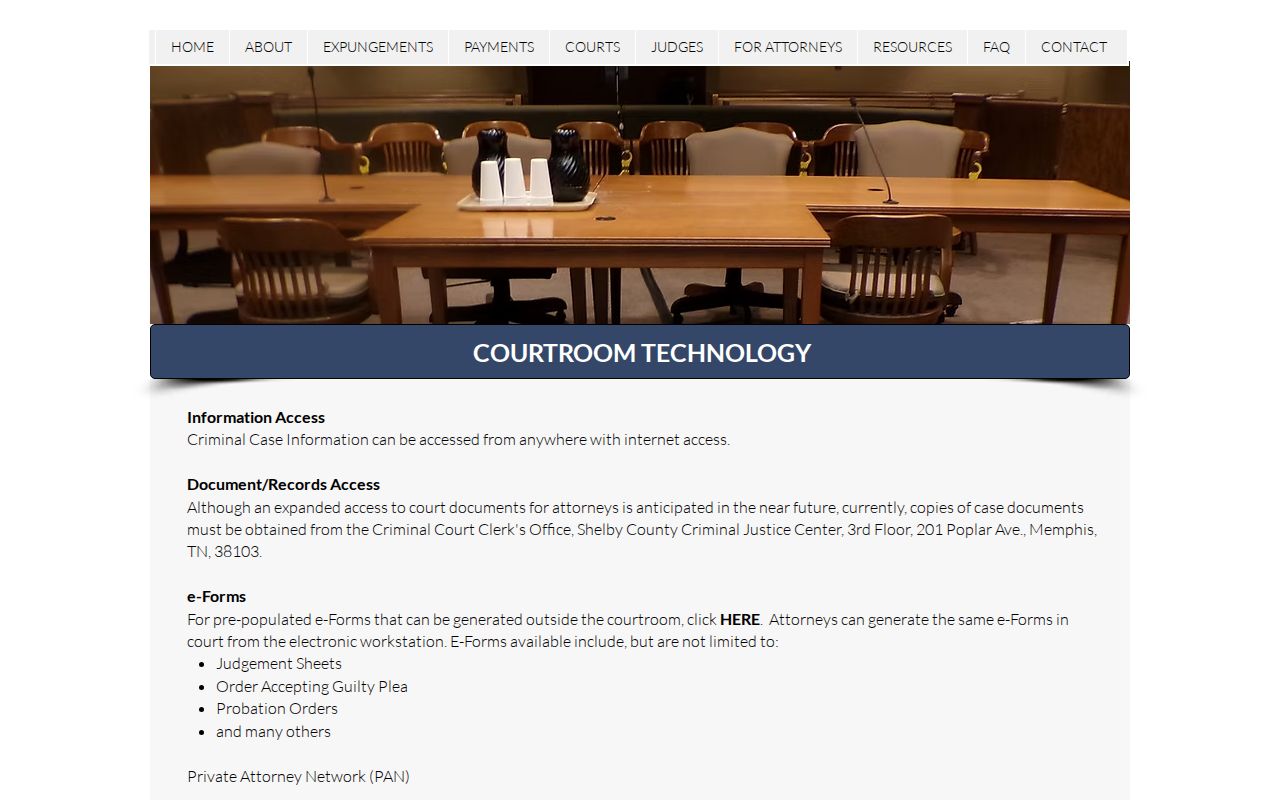
A lookup screen is not the paper behind it. Tell the clerk exactly what you need. Ask for a named record, such as the docket sheet, final judgment, plea order, or sentencing order, rather than asking only for "the case."
Stages on a Criminal Docket
A criminal matter often starts with an arrest, booking, or citation. A General Sessions appearance or preliminary hearing may follow. A felony case can then be bound over and considered by a grand jury. It may then be assigned a Criminal Court indictment. Arraignment, pretrial motions, plea discussions, and trial each land on the docket as separate events. So do disposition, sentencing, probation activity, and post-judgment filings. The case identifier may change too.
Docket flow: Filing › Arraignment › Pretrial › Plea or Trial › Disposition › Sentencing
Never treat a stage as an outcome. "Motion" means relief was requested, not granted. "Continued" only means the setting moved. When the exact result matters, check the activity against the entered order, since a plea order, judgment sheet, sentence, and balance line answer separate questions.
Shelby County Daily Criminal Dockets
The Shelby County archive and CJS serve different needs. A dated daily docket is a calendar-like list for one court and date. It may show the division, scheduled time, identifier, proceeding, counsel, appearance, and status. CJS case history follows one case. General Sessions Criminal local rules also state that daily dockets are posted in a prominent place. That place is outside the clerk's office. The posting is an in-person fallback when an online file is missing.
| Source | Best use | Limit |
|---|---|---|
| County archive docket | Find a dated State Criminal or Sessions list | May not show the full later trail |
| CJS case history | Track one Criminal Court case | Registration is required; papers may not attach |
| Posted daily docket | Check the current Sessions courtroom list | A setting does not prove the hearing occurred |
Use the archive's date and category controls with care. Then check later activity for a continuance, disposition, or next setting.
Which Court Holds Criminal Dockets
General Sessions Criminal Court handles misdemeanor-level matters, preliminary hearings, and criminal or traffic proceedings within its jurisdiction. Criminal Court takes felony indictment proceedings. Shelby County identifies ten Criminal Court divisions. Court Operations supports nine General Sessions criminal divisions. It also screens those daily dockets for bond consideration. A case that moves between levels can leave an originating record plus a later indictment record.
Both adult criminal routes sit at 201 Poplar Avenue. They do not share one counter. General Sessions Criminal records route through the lower-level clerk operation, while Criminal Court records route through Suite 3034. Juvenile matters use a different court and different access rules, and Memphis Municipal Court operates at the same building but keeps its own city docket. The clerk matters more than the address.
Shelby County Criminal Docket Outcomes
Copy outcome words exactly as the Shelby County clerk wrote them. "Dismissed," "nolle prosequi," "no true bill," "not guilty," and "convicted" each mean something different. When a docket says "nolle prosequi," the prosecution walked away. It dropped the stated matter. "No true bill" has its own meaning. The grand jury declined to indict. A dismissal can carry terms or reasons that sit only in the order itself. And a continuance is not a dismissal. It just moves a court date.
- Continued or reset
- The hearing moved; look for the next date and division.
- Nolle prosequi
- The prosecution did not proceed as recorded; keep the clerk's wording.
- No true bill
- A grand jury outcome that should be checked in the Criminal Court record.
- Expunged
- A record-removal action governed by eligibility and clerk processing, not a synonym for acquittal.
Read the status label next to the judgment, order, or a later Shelby County criminal docket entry before drawing any conclusion. When a public search shows nothing, an access limit may be the reason, so it never supports a guess about the case.
Shelby County Criminal Docket Requests
When you ask the Shelby County Criminal Court Clerk for a docket record, be specific. Name the court, the case number, and the division. Give the date range and the exact item you want. You can also choose between two services: inspecting a record or getting copies. Under the clerk's policy, inspection is free. Black-and-white letter or legal copies run $0.50 per page, and color copies run $1 per page. Media, retrieval, labor after one hour, postage, programming, and fax costs may apply. Electronic delivery may be an option, though personal scanning equipment is barred by the stated policy.
The official Criminal Court public-record policy spells out the full rule set. It covers inspection, copies, delivery, and equipment.
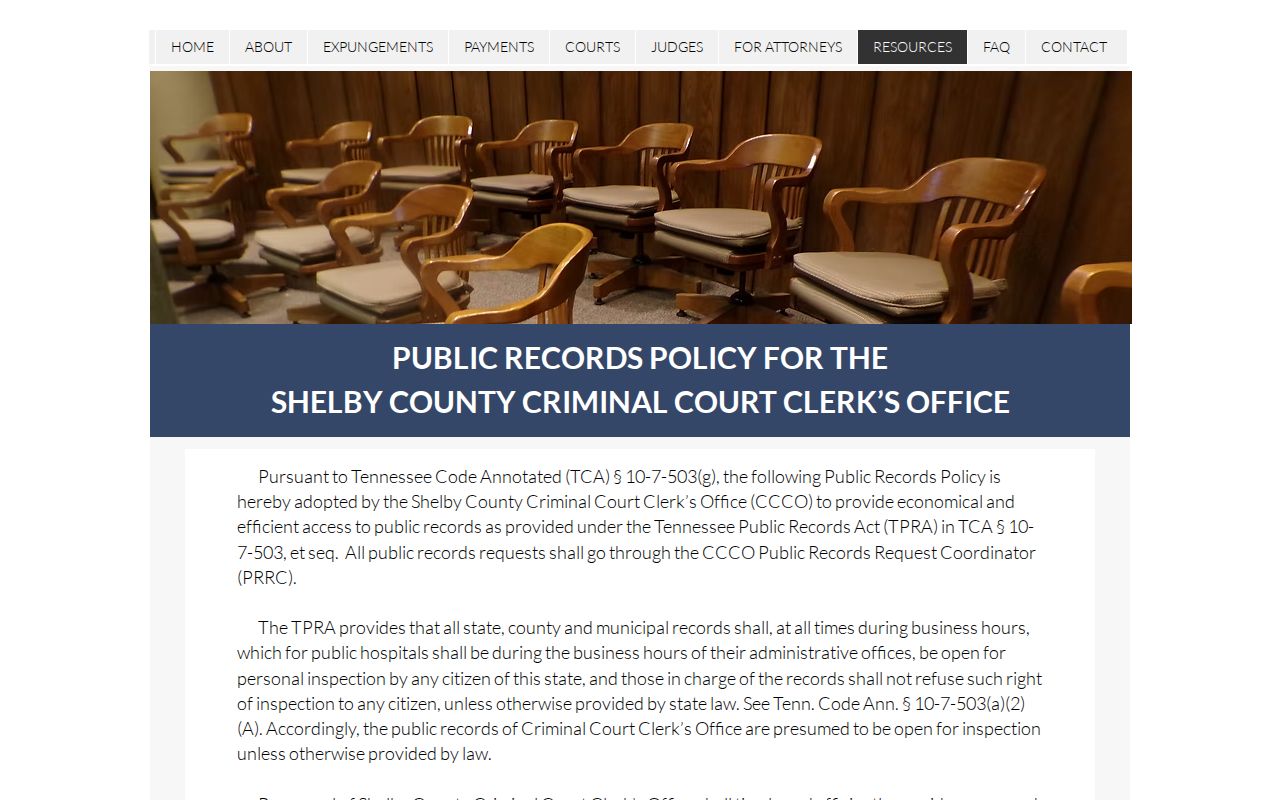
That policy view helps a requester weigh two paths. One is to inspect a court docket first. The other is to authorize a copy estimate. The request coordinator sits at 201 Poplar Avenue, Suite 3034. The phone there is 901-222-3200. Criminalcourt.records@shelbycountytn.gov is listed for requests as well.
The clerk FAQ describes an office search. It may use a full name plus other identifying facts. Share only what the secure official channel requires. The clerk's record-location instructions show why a direct office request works differently from a public web search of court records.
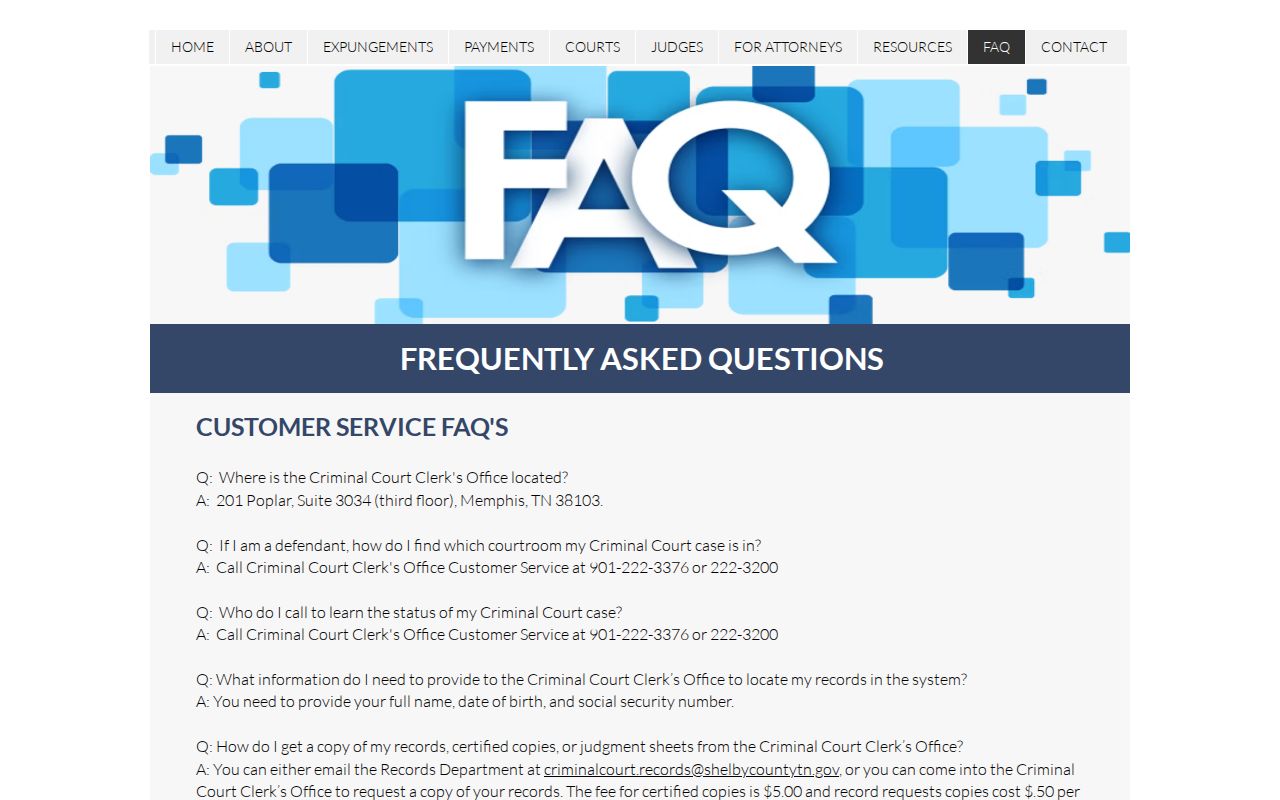
The displayed instructions send record-location questions straight to the clerk. Even so, they are not a reason to publish sensitive identifiers in notes, emails, or a public docket search.
Public Access and Sealed Criminal Dockets
Tennessee court records are open to the public, but only within set limits. Shelby County criminal docket access works record by record. The docket index may be public. But a paper tied to it can be redacted, sealed, held offline, or open to the clerk alone. Juvenile confidentiality, expungement, and protective orders can each narrow what you get. Rules protecting judicial work can too. If a docket search comes back empty, take that question to the clerk. A missing result proves nothing about what happened in the case.
Key rules:
Tennessee Supreme Court Rule 34 defines public court records and recognizes specific exceptions.
Juvenile Rule 114 gives juvenile proceedings access rules unlike adult criminal cases.
TBI expungement guidance explains qualifying routes, while a request starts with the local clerk.
When a matter is expunged, sealed, or restricted, ask the office which order or rule controls it. Drug Court and Veterans Court publish general program details. That public material does not replace a participant's criminal docket or private treatment record.