
How to Search Civil Dockets
First figure out which Shelby County clerk holds the case. Circuit Court takes broad civil suits plus appeals from the lower courts. Chancery handles equity and specialized matters. General Sessions Civil covers smaller claims and forcible-entry-and-detainer proceedings. There is no single combined database. Searching the wrong portal can return nothing even when a public Shelby County civil docket exists.
Bring a full case number if you have one. Otherwise run a party or business name. Narrow the results by court, case type, and date. What you get back may be an index, activity list, docket report, judgment search, or calendar entry. Read the label before treating it as the whole record.
- Identify Circuit, Chancery, or General Sessions Civil from the pleading or subject.
- Open that court's official person, business, case-type, or case-number search.
- Confirm the case style, number, filing date, division, and case type.
- Open the activity or docket report and check filings, settings, orders, and status.
- Contact the responsible clerk for an unlinked paper, plain copy, or certified copy.
Shelby County Civil Docket Searches
Circuit Court splits its lookup into person and case inquiry, judgment search, and docket-report search. Each answers a different question. A party search locates the file. A judgment search targets judgment data. The docket report lays out the activity in order. The live portal has access protection, so check the required markers and option lists on the current screen rather than guessing. The official Circuit person and case search is the first route.
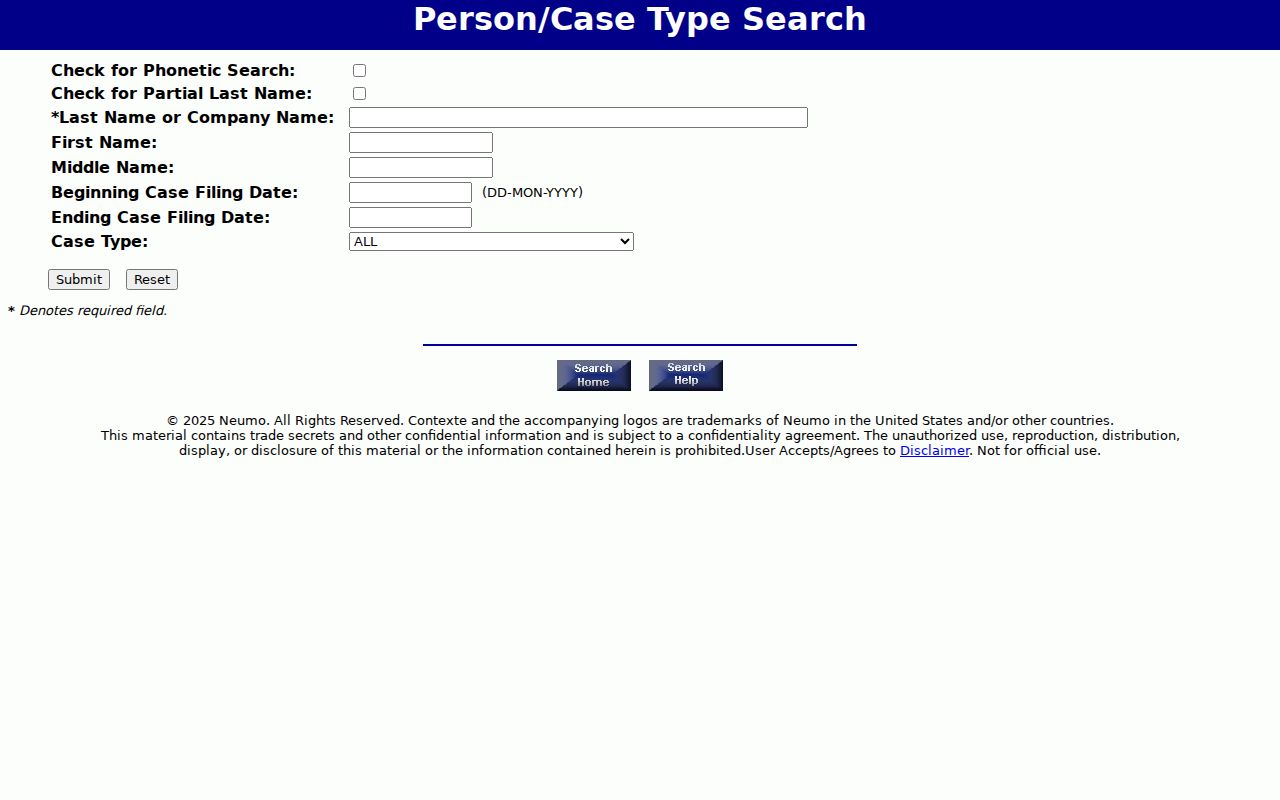
This public screen is the place to locate a Shelby County Circuit case before moving to the activity or judgment endpoint. If access protection appears, save the endpoint and use the Circuit Court Clerk. Skip the commercial substitutes.
What a Civil Docket Shows
Think of a civil docket as the clerk's ordered record of events. Shelby County portals may show the case caption, court part, filing date, party roles, counsel, filings, motions, service, settings, orders, judgment activity, and appeal notices. A document link can be missing for different reasons. The paper may not be scanned, may be clerk-only, may be sealed, or may be restricted. Those states are not interchangeable.
| Case number | The court-specific identifier, including a Chancery style such as CH-24-0774. |
|---|---|
| Case style | The caption or short title, which may abbreviate party or business names. |
| Parties and roles | Plaintiff, petitioner, defendant, respondent, estate, guardian, or another role. |
| Activity | A filing, motion, service event, hearing notice, order, or judgment entry. |
| Setting | The event date, time, hearing type, division, location, and current status. |
| Result | A judgment, dismissal, settlement entry, pending order, or other clerk label. |
A filed motion is not a granted motion. In the same way, an order setting a trial date is just a scheduling step, not proof the trial happened.
Shelby County Civil Docket Reports
The Circuit docket-report endpoint fits activity research once the case is known. Use it beside, not instead of, the person and case search. Write down the case number, date range, and division you selected. Then read the event date and description for each filing or court action. The report can establish sequence. But an entered judgment or certified copy carries the authoritative text. The county's Circuit docket-report search shows the official fields and output route.
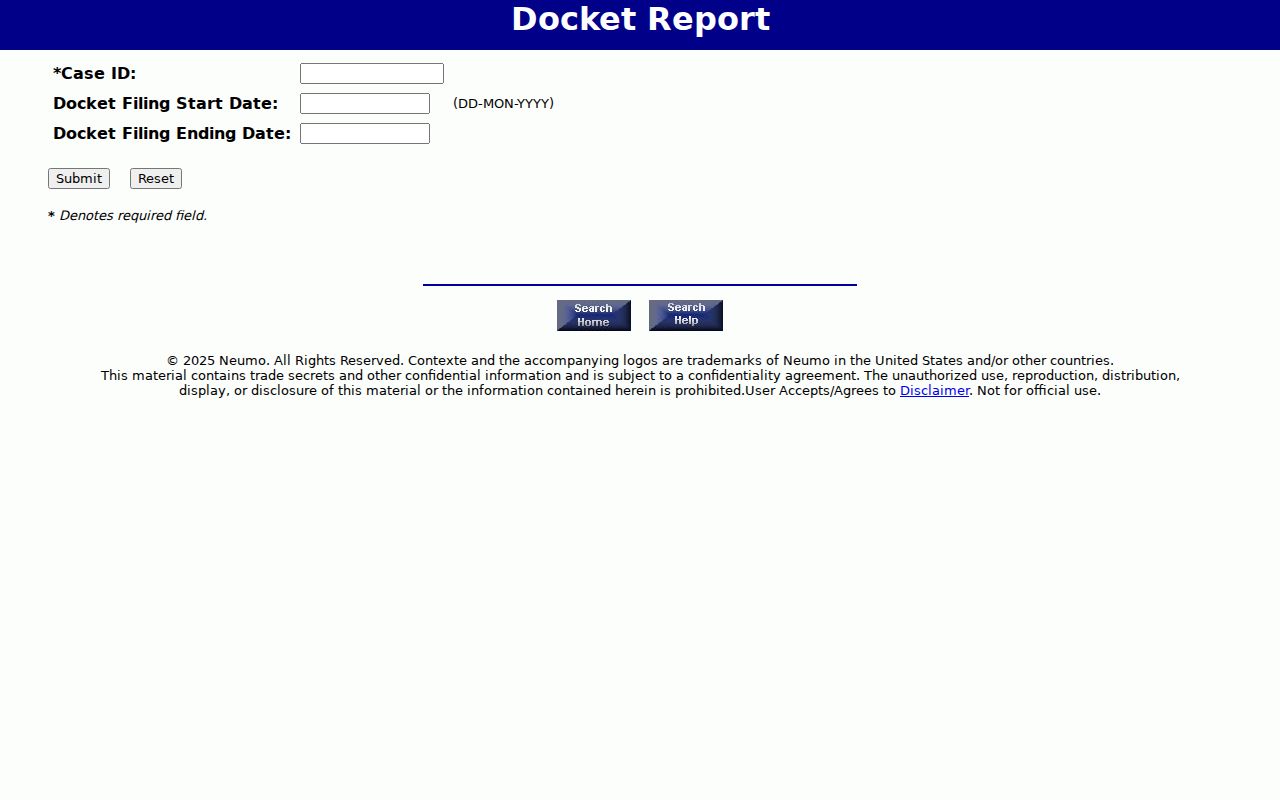
The screen shows why a docket report beats a broad name search for precision. Find the entry with the report. Then request the underlying order when its exact terms matter.
Types of Civil Cases on the Docket
Knowing the civil subject matter points you to the right Shelby County docket. Circuit hears lower-court appeals, auto accidents, breach of contract, condemnation, divorce, medical malpractice, minor settlements, name changes, personal injury, workers' compensation, and wrongful death. Chancery covers equity and special matters: declaratory judgments, delinquent tax sales, arbitration enforcement, mandamus, public nuisance, replevin, usury, and some divorce and workers' compensation matters. General Sessions Civil takes the smaller civil disputes and forcible-entry-and-detainer cases.
- Circuit: general civil suits, listed injury and contract matters, and lower-court appeals.
- Chancery: equity, tax-sale, injunction-like, and other specialized civil work.
- General Sessions Civil: lower civil claims and possession proceedings under its jurisdiction.
- Probate: estates and protective proceedings use a separate Probate Court docket.
- Juvenile: child-related proceedings use separate access and confidentiality rules.
A divorce entry may land in Circuit or Chancery depending on assignment and process. A brief calendar line will not reveal private child or financial facts, so do not read those into it.
Shelby County Civil Judgment Searches
An activity result and a judgment result are related but not identical. When the question is whether judgment data appears, the judgment endpoint is the better start. The activity report may list a judgment entry among many events, while the separate search is built for that record type alone. Confirm the case number and court before trusting a name match. The official Circuit judgment search displays its own search labels.
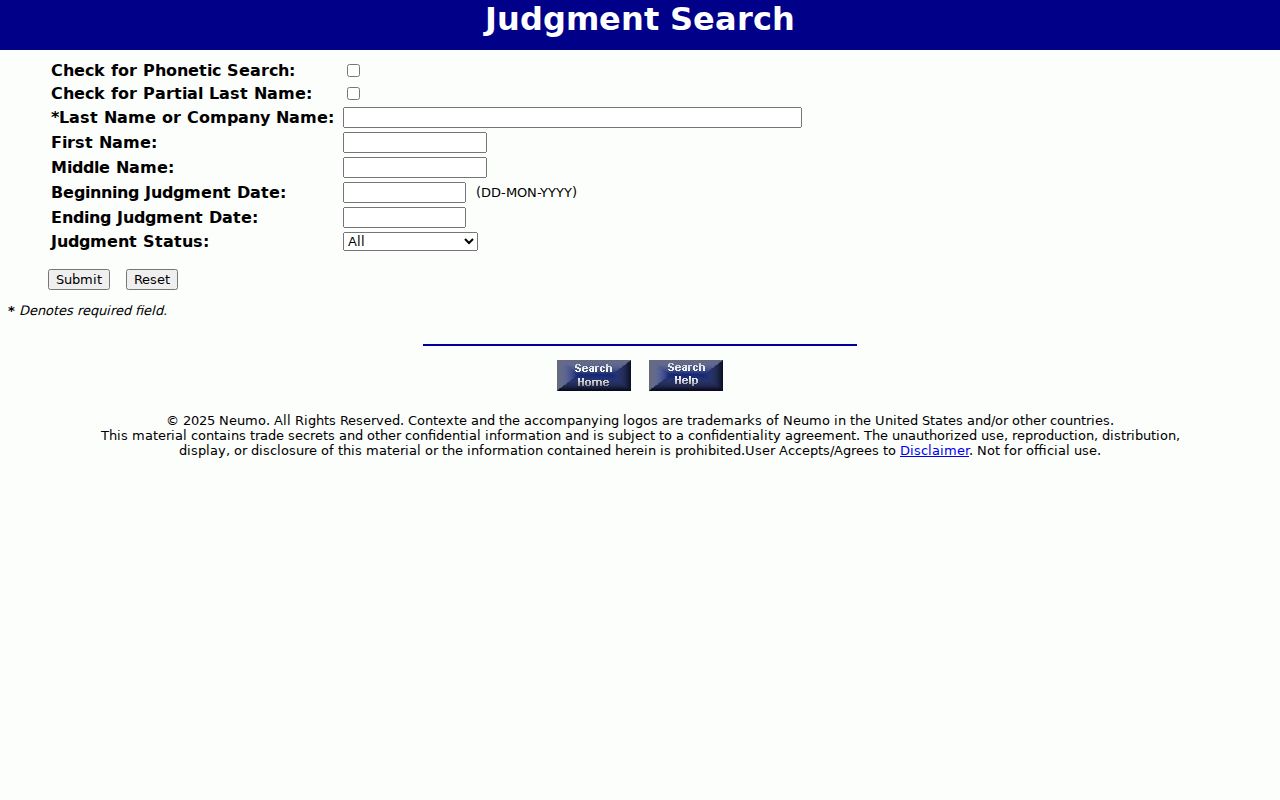
The separate screen underscores a key Shelby County distinction. The case index, docket report, and judgment query are three views, not three copies of the same result.
Settings and Hearings on Civil Dockets
Civil settings show up as notices, motion dates, status conferences, trial settings, continuances, and calendar strikes. Circuit publishes division contacts. It hears orders Monday through Thursday at 10:00 a.m., with Friday motions at 9:00 a.m., subject to current division notices. Chancery guidance says matters run in person unless an exception applies. Limited Rule 10 and uncontested-divorce slots use online request forms.
Read the schedule verbs with care. "Order to set trial date" directs later scheduling. "Case continued certain" moves the matter to a stated setting. "Calendar strike (T)" removes a setting without dismissing the case. "Status Conference Held" confirms that event but not a final result. Check any current setting against the division calendar and later docket activity.
Shelby County Civil Service Dates
General Sessions Civil runs on its own local procedure in Shelby County. The local rules cover summons, written pleadings, sheriff service, and how trial dates are noticed. Read a summons together with its service return. The served paper carries the trial date and time. A service event can be missing or changed. The next step in the case can shift. A short activity list on the docket may not reflect the whole paper file either.
The General Sessions Civil portal lets you search a person name, business name, or case type. It shows case information, activities, and judgment routes. It does not mix General Sessions cases with Circuit or Chancery. If a service or trial entry on the civil docket looks unclear, call or visit the General Sessions Civil Division. It sits at 140 Adams Avenue, Room 106. Guessing from another court's setting is a bad idea.
Shelby County Civil E-Filing
Shelby County eFlex takes new and later filings for Circuit and Chancery. It is a channel for authorized filers, though. It is not the public docket for every Shelby County civil case. A filer may get a submission or system confirmation early. The clerk still has to accept the document and post it. That receipt proves nothing about a judge ruling on the filing.
After you submit, watch the court's public activity or docket report for the clerk-posted event. Service and payment are separate steps. Follow the eFlex instructions for those. Logged-in filers can use "My Cases" for details. It shows case style, number, type, judge, court, certificate, and inactive status. General Sessions Civil files through a different route.
Public Access to Civil Dockets
Tennessee Supreme Court Rule 34 sets the rules for public access to court records. Case records stay open unless a statute or a court order says otherwise. On the civil side, Tennessee sealing principles also lean toward openness. A judge may seal a filing only when a serious and substantial interest outweighs public access. Nothing less restrictive would work. In Shelby County, access can differ item by item. One entry in a civil docket might be a public index, a scanned pleading, an exhibit, a certified copy, or a sealed filing. Each can carry its own access status.
Key rules:
Tennessee Supreme Court Rule 34 defines public court records and the main access exceptions.
Tennessee civil sealing principles require specific findings rather than a casual assumption that a whole file is closed.
Tennessee Public Records Act guidance explains request detail, citizenship, identification, and public-record limits.
A missing online document has several possible explanations in the Shelby County civil docket. It may not be scanned yet. It could also be sealed, redacted, archived, or held only at the clerk's counter. Circuit records before 1999 sometimes need retrieval from the Archives. Archival copies cannot be certified. When you request copies from Circuit, you can ask to inspect the record, pick it up on site, or receive it by USPS, electronic delivery, or another method the clerk agrees to. The copy schedule sets plain copies at $0.50 per page. Certified copies run $5 plus $0.50 per page.